
What I do
Operations leadership when the numbers have to move now
I step in where delivery, cost or a transition has started to slip, and take operational charge until the numbers hold. Four ways to engage me, one standard: I own the outcome.
How I help
Four core engagements
The aim is the same in each: control back quickly, execution that holds, and an operation that no longer needs me when I leave.
 01
01
Interim Operations Leadership
Brought in on interim mandates — from general manager or factory CEO of the whole unit down to COO, operations director, head of operations, plant or production manager — embedded and accountable for delivery.
Jump to section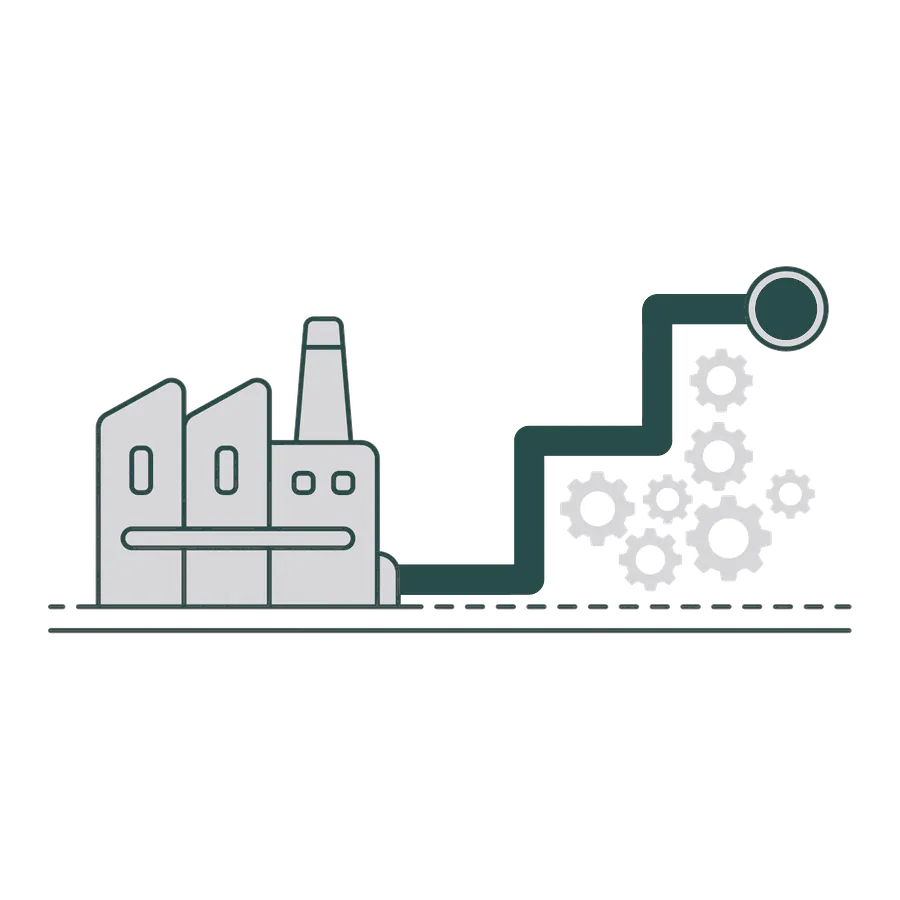 02
02
Turnaround & Stabilisation
Delivery, quality or cost has drifted. I take charge of the operation, find where it actually breaks, and stay until the numbers hold on their own.
Jump to section 03
03
Transformation & Transitions
Leadership through scale-ups, restructurings, factory transfers and the move to stable serial production.
Jump to section 04
04
Board Work & Expert Calls
Board seats and an operator’s expert call — a straight read on your business, your plan or your management team.
Jump to section
Interim Operations Leadership
I step in as the operational leader, inside the organisation and answerable for delivery from the first week. The decisions are mine to make and mine to defend.
I set the operating rhythm, settle the arguments between functions and keep delivery moving while you recruit the permanent leader. The mandate is real: decisions, follow-up and results, not a report from the sidelines.
Some mandates cover the operation. Others put the whole unit on my desk as general manager or factory CEO — P&L, customers and organisation in one mandate. I have carried both scopes; the situation decides which one you need.
Typical mandates
- Interim COO or Operations Director
- General manager / factory CEO — the top seat of a factory or manufacturing unit
- Plant or site management
- Head of Operations
- Operations, production or engineering management
- Bridging a sudden leadership gap
- Structured handover to permanent leadership
- Operational excellence (OpEx) — production systems, lean programmes and daily management that holds
“There was barely a functioning factory to start from.” — the supply chain manager who reported to me, on what the mandate began with.60+ specialists and operators recruited during a single ramp-up, in a fiercely competitive talent market. The first wave of 50 was approved in the meeting where I presented the case — three weeks into the mandate.
Operational Turnaround & Stabilisation
For sites and operations that need performance recovery, stronger governance or a step change in output and reliability.
I lead the diagnosis, set a practical plan and execute it with the team — not for them. The work starts on the floor, where the causes usually sit, and connects straight up to governance and decision-making so improvements actually hold. Done right, the engagement pays for itself before it ends.
Where it applies
- Underperforming plants and delivery problems
- Output, quality and reliability recovery
- Weak operating rhythm and governance
- Supply chain and planning under strain
- Cost and productivity pressure
Delivery precision 90 → 97 percent at a high-volume plant — and +7% productivity per year, delivered as a hard annual target.Separately, in a manual-assembly operation, I cut the average lead time of one product range from 24 working days to 7, while bringing critical equipment back in-house.
Transformation, Scale-up & Transitions
Leadership through operational change in every direction: scaling up and scaling down, prototype to serial production, factory moves and consolidations, outsourcing and bringing machines and processes back home.
Operations move in every direction — up, down, out and home. I have run all of them.
This is where I have spent much of my career: ramping a new operation to serial production, or moving and consolidating one with the customer kept supplied along the way. I have led four restructurings from four different seats — the operator on the floor, the board member who took the decision, the HQ owner whose account was on the line, and the receiving end, the time the axe fell on my own role. I know what each of those choices costs, and what it yields.
Factory relocation & production transfer, in depth
Also in depth: factory closure · prototype to serial · new line & industrialisation · post-acquisition integration · insourcing
Typical situations
- Production ramp-ups and controlled ramp-downs
- Prototype or project to serial production
- Factory transfers, consolidations and closures
- Outsourcing, and reshoring machines and processes back in-house
- Restructurings, workforce reductions and leadership realignment
- Union and co-determination negotiations
The largest of the four: 150+ people through a full closure, production moved to five plants in four countries.Months of planning and preparation, competence transfer, then the physical move of the machines themselves — and three to six weeks on each receiving site until output was fully restored, deliveries protected the whole way through.
Board Work & Expert Calls
I work with owners, boards and CEOs on the distance between what the board decided and what the floor is actually doing about it. I sat on an industrial company’s board for four years, through a period of heavy transformation, and as a certified board member I bring that governance perspective to situations where execution, ownership alignment and decision quality are all under pressure at once.
A private equity owner rarely needs another manager on the payroll. What the situation calls for is an independent operating partner, and often an executive expert call before that: an executive operator’s read on an industrial business, its plan and the team running it. That judgement comes from having run a unit as a whole business — P&L, customers and organisation — and answered for the result. In a portfolio company, the highest-leverage window is usually months three to twelve after closing, when the value-creation plan must turn into daily operations. The first hundred days after closing decide whether that plan becomes the way the business is run or stays a document.
This includes
- Operational due diligence and value-creation input
- Governance through clarity and disciplined follow-up
- Risk management and decision support
- Board work for production-intensive companies
More than the certification: four years in a company boardroom, through heavy industrial transformation — governance carried from the inside, not only studied.Certified board member (Styrelseakademien). Start with an hour: an expert call where I read your situation and tell you the truth.
By situation
Or start from your situation
The same work, seen as the specific problems I’m brought in for. Each one goes deep — the method, the checklist and what I own.
How I work
A clear mandate, then execution
First the few things that move performance fastest. Then the operating model, and the people who own it once I am gone.
- The mandate is written down. Objectives, decision authority and what I am allowed to change, agreed before I start.
- I sit inside the operation. Not in a project room. Line managers and operators see me daily.
- Decisions follow the numbers. I act on what moves performance, and change course when the data says I was wrong.
- A cadence everyone can see. Shift, week and month, so performance is public to the people who own it.
- The people carry it, or nobody does. Alignment is not a soft phase of the work. It is most of it.
- I hand over capability, not a report. The results have to survive my last day.
Who I work with
Owners, boards and leadership teams
Engagements run from focused expert support and advisory to full interim executive roles — in Sweden and internationally.
Owners & boards
You cannot stand in the plant every day. I do it for you, and you get the report without a filter.
Private equity
The model is priced on paper. I test it against the line, the shift pattern and the team that has to deliver it.
CEOs & executives
A senior operator beside you who takes the operation off your desk — without competing for your seat.
Operations teams
A leader who has done the job, not a reviewer. Production, supply chain and planning under one mandate.
The practical side
How an engagement is set up
Contract form
Directly with my company, LeadOps — or through the interim provider you already work with. Same person, same accountability, whichever route fits your procurement.
Mobilisation
For urgent situations I can usually be on site within days. The mandate starts when you need it, not when a recruitment cycle ends.
Formats
Interim mandates typically run six months or longer; expert calls start with an hour; board work follows the board’s calendar.
Common questions
What clients ask before we start
What is interim operations leadership — and when do you need it?
Interim operations leadership means an experienced operations leader steps in for a defined period and takes real responsibility for delivery — as COO, operations director, plant manager or production manager. You need it when delivery is slipping, a ramp-up or factory transfer has to succeed, or a leadership gap opens in the middle of it.
At what level do you step in?
At the level the situation requires. I have led every level from production management to COO, often with a bigger title and a wider scope than the level itself, and I still take whichever one fits — plus board work and expert calls. That includes the top seat: a factory or unit run as its general manager, the whole business in one mandate. The title is not the point; the mandate is.
Are you an operations leader or a general manager?
Both — and the span is deliberate. I am brought in when something has to change and the change needs seniority: beside a CEO as the senior operator, or in the top seat, running a factory or unit as its general manager with P&L, customers and organisation in one mandate. In mid-size industrial companies the top job is an operational job, so the two roles are closer than an org chart suggests. What I am never is a caretaker — the mandate is always to change something and answer for the result.
How quickly can you start?
For urgent operational situations I can usually be on site within days. A short first call is enough to scope the mandate and confirm whether I am the right fit — and if I am not, I will tell you.
What happens when you leave?
The structure stays. I build the operating model so the organisation owns it — daily management meetings, KPI cadence from shift to site, trained owners — and close with a structured handover. The goal is simple: the numbers must not depend on me being in the building.
How do you handle a factory closure or relocation?
With method, control and openness — not a promise that nothing will ever wobble, because every move is different and none of them is simple. The work is months of preparation before anything moves: competence transfer and training, buffer stock sized to carry the customer through the transition, retention and bonus terms negotiated with the unions so people have a reason to stay and deliver to the last day, and continuous, honest communication with everyone affected. Then I stay on the receiving site, usually three to six weeks, until output, quality and safety are back where they were. I have done this four times, from four different chairs — the governance and the experience are what I can promise.
What size and type of company do you work with?
Industrial and manufacturing operations of most sizes: owner-led and family companies, private-equity portfolio companies and larger group sites. The span runs from start-ups and new lines, through low-volume high-mix precision, to high-volume serial production — the common thread is an operation under pressure to deliver, scale or change. The largest single P&L I have owned was a plant selling finished products to end customers, with revenue around €80 million.
When in an ownership cycle do you add the most value?
Most leverage sits in months three to twelve after a change of ownership, when the value-creation plan has to become operational fact. I also work at both ends of the cycle: operational due diligence before a deal, and exit-readiness before a sale — stable numbers, a governance structure that stands on its own, and no dependence on any one person.
We acquire companies faster than we integrate them — how do you help?
That gap is common in acquisition-driven groups: each deal adds plants, systems and management teams faster than the integration capability grows. I take an acquired operation through the integration itself — common governance, factory moves and consolidations where they are justified, margin work on the floor — and leave a structure your next acquisition can reuse. Behind it sits a transfer record of five receiving factories in four countries, with customer deliveries protected throughout.
We are a family-owned company facing a generational transition. What does that look like?
A transition is an operational event as much as a legal one. I step in as the bridge: keep delivery stable while ownership changes hands, build the operating structure the next generation — or the first external leadership — inherits, and hand over in a structured way. The owner keeps the strategic decisions; I make sure the operation carries them.
Do you work outside Sweden?
Yes. I am based in Sweden and take assignments across the Nordics and Europe. I have led cross-border transfers and restructurings involving Sweden, Norway, Germany, Poland, the UK and Finland. In the Nordics there is no culture bridge to build — I led a Norwegian plant as a Swede for four years, in the shared Scandinavian working language.
Do you have experience in our industry?
In the operating system, almost certainly — even when the product is new. I have run aerospace serial production, high-volume electrical products, plastics and polymers, and regulated pharmaceutical packaging; the pattern repeats: the sector is new, the system is not. Takt, flow, quality discipline and leadership on the floor travel between industries. The product specifics I learn on your floor, fast.
Interim leadership or an expert call — which do I need?
If the operation needs someone accountable for delivery right now, that is an interim role. If you want an operator’s judgement on a plan, a team or a decision, start with an hour — an expert call. We settle which one fits in the first conversation.
Do we contract with you directly or through an interim provider?
Both routes work. You can contract directly with my company, or bring me in through the interim provider or executive-search firm you already use. The person, the mandate and the accountability are the same either way — the route is a procurement choice, not a difference in commitment.
Which mandates do you say no to?
A few kinds — though I never say no until I understand what I am saying no to. I decline mandates where the responsibility comes without the authority to act, and work outside industrial operations where someone else is simply better. The fifteen-minute call exists exactly for this: if I am not the right person, I say so and point you somewhere better.
Aren’t you too senior for hands-on work?
The title is for the boardroom; the work happens on the floor. I am as comfortable in a management meeting as at a machine, and I stay close to where the value is actually made. The mandate decides my altitude — the floor is where I verify it.
Let’s talk
Discuss your situation
Fifteen minutes is usually enough to tell whether this is my kind of problem. If it is not, I will say so and point you somewhere better.
I reply within 24 hours.